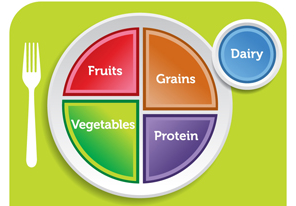
Plate = New Symbol for Healthy Eating
Goodbye, pyramid. Hello, plate.
The Food Guide Pyramid was the model for healthy eating in the United States. Maybe you had to memorize its rainbow stripes in school.But the USDA, the agency in charge of nutrition, has switched to a new symbol: a colorful plate —called MyPlate — with some of the same messages:
- Eat a variety of foods.
- Eat less of some foods and more of others.
The pyramid had six vertical stripes to represent the five food groups plus oils. The plate features four sections (vegetables, fruits, grains, and protein) plus a side order of dairy in blue.The big message is that fruits and vegetables take up half the plate, with the vegetable portion being a little bigger than the fruit section.And just like the pyramid where stripes were different widths, the plate has been divided so that the grain section is bigger than the protein section. Why? Because nutrition experts recommend you eat more vegetables than fruit and more grains than protein foods.The divided plate also aims to discourage super-big portions, which can cause weight gain.
Pyramid vs. Plate: What's different?
While the basic nutritional guidelines for Americans remain the same, the USDA Plate and the old pyramid do have a few noticeable differences
|
- Less emphasis on grains. The food pyramid was dominated by grains, which filled in the largest spot at the bottom of the pyramid in the original version, and the large orange vertical bar in the 2005 version. The Plate version reserves only one quadrant for grains (with an emphasis on whole grains) and really focused on fruits and vegetables, which take up half the plate—more than any other food group. Many nutrition experts see this as a major improvement since Americans tend to fall short of reaching their minimum 5-a-day requirements. If half of the food you ate at each meal was comprised of vegetables and fruits, you'd have no problem reaching 5-9 servings of fresh, frozen, cooked or canned produce each day.
- No mention of fats and oils (or sugars for that matter). These appeared on the old pyramid, shown in small quantities with the message to eat these foods rarely or in small amounts. These don't show up anywhere on the Plate, despite the fact that not all fats are created equal and that dietary fat is essential to optimal health. One could assume that the foods you include on your plate are going to contain fat, or be prepared in some source of fat, but the fact that it's not mentioned at all as part of a healthy diet may seem questionable—especially when Americans tend to consume too much of the wrong kinds of fats. Don’t despair, a quick click to the ChooseMyPlate.gov site provides in-depth information about fats, oils and added sugars.
- Bye, bye serving sizes. Not only did the food guide pyramid tell you how many servings of each food group to consume each day (such as 6-11 servings of grains), but it somewhat alluded to how large a single serving actually was. The Plate does not depict or mention how many servings you should eat of any particular food group, nor how big a serving actually is. Many nutrition professionals have been using a plate method similar to this to educate clients for years. The assumption is that if you eat off of a normal sized plate (nine inches in diameter or smaller), and if you don't pile your food up too high, you're eating a normal, healthy amount for weight management. In a sense, the lack of serving sizes makes the Plate simpler to implement and understand than the pyramid once was. And for more specific amounts of foods needed for children, teens, adults (even during pregnancy and breastfeeding), the ChooseMyPlate.gov site allows you to enter your personal data and get an individualized eating plan.
- Where's the beef? While the pyramid featured food groups, the plate mixes in one other element: nutrients. At least as far as protein is concerned. Protein is a nutrient found in various foods, not an actual food group, which has left some people perplexed. Fruits (food), vegetables (food), grains (food), and milk (food) are all represented, but protein (nutrient) seems out of place. The USDA says that in their test groups, Americans of all racial and ethnic backgrounds understood what "protein" meant: a variety of sources (meat, eggs, dairy, nuts, seeds, beans, soy, etc.). Some critics say that protein is found in many foods already listed on the Plate, such as grains, milk and even vegetables, and that this might confuse consumers. Other critics of this approach feel that Americans will only think of "meat" when they hear the word protein, even though plant-based proteins are also healthful and should be included in one's diet. Most likely, simplifying the once tongue-twisting name (the meat, beans, nuts, and legumes food group) into "protein" was just easier when designing this graphic. After all, simplicity and ease of understanding is the main goal of the Plate.
Although no single image can possibly convey all the complexities of nutrition and healthy eating, many see the Plate as an improvement over the pyramid of our past. According to the USDA and other food experts, the simple Plate icon is easier to understand. You can look at it once and easily remember what it conveys, and which food groups it includes. Most people couldn't say the same about the complexity of the food pyramid.
What's a Grain Again?
You know what fruits and vegetables are, but here's a reminder about what's included in the three other food groups: protein, grains, and dairy:
- Protein: Beef; poultry; fish; eggs; nuts and seeds; and beans and peas like black beans, split peas, lentils, and even tofu and veggie burgers. Protein builds up, maintains, and replaces the tissues in your body.
- Grains: Bread, cereal, rice, tortillas, and pasta. Whole-grain products such as whole-wheat bread, oatmeal, and brown rice are recommended because they have more fiber and help you feel full.
- Dairy: Milk, yogurt, cheese, and fortified soy milk. With MyPlate, the dairy circle could be a cup of milk, but you also can get your dairy servings from yogurt or cheese. Choose low-fat or nonfat dairy most of the time.
Thanks for reading ! below are some great deals on products to to assist you with healthy living & eating.
PLEASE SUBSCRIBE TO OUR BLOG BY CLICKING HERE --->>
SUBSCRIBE <<---
- "Drop Pounds, Live Longer"